
Water in your home needs fast action.
A burst pipe, toilet overflow, leaking water heater, or storm leak can spread quickly. Floors, drywall, baseboards, cabinets, and crawl spaces can hold moisture.
Call [phone number] for emergency water cleanup in Fremont. We remove standing water, check wet areas, start drying, and document the damage.
We help homes, condos, apartments, rentals, offices, shops, and small buildings across Fremont.
| Situation | What To Do Now | What To Avoid |
|---|---|---|
| Burst pipe | Turn off the water supply | Do not wait for standing water to spread |
| Toilet overflow | Keep people and pets away | Do not touch dirty water |
| Roof leak | Move items from the wet area | Do not climb on a wet roof |
| Appliance leak | Unplug nearby devices if safe | Do not step in water near outlets |
| Flooded room | Call for water extraction | Do not use a household vacuum |
What should you do first after water damage in Fremont?
Stop the water source if it is safe.
Turn off the supply valve, if you can reach it safely. Stay away from standing water near outlets, panels, or appliances.
Move dry items away from wet floors. Take photos before cleanup starts.
Then call for water extraction and drying.
Ready.gov warns people not to touch wet electrical equipment. It also warns against standing in water near electricity
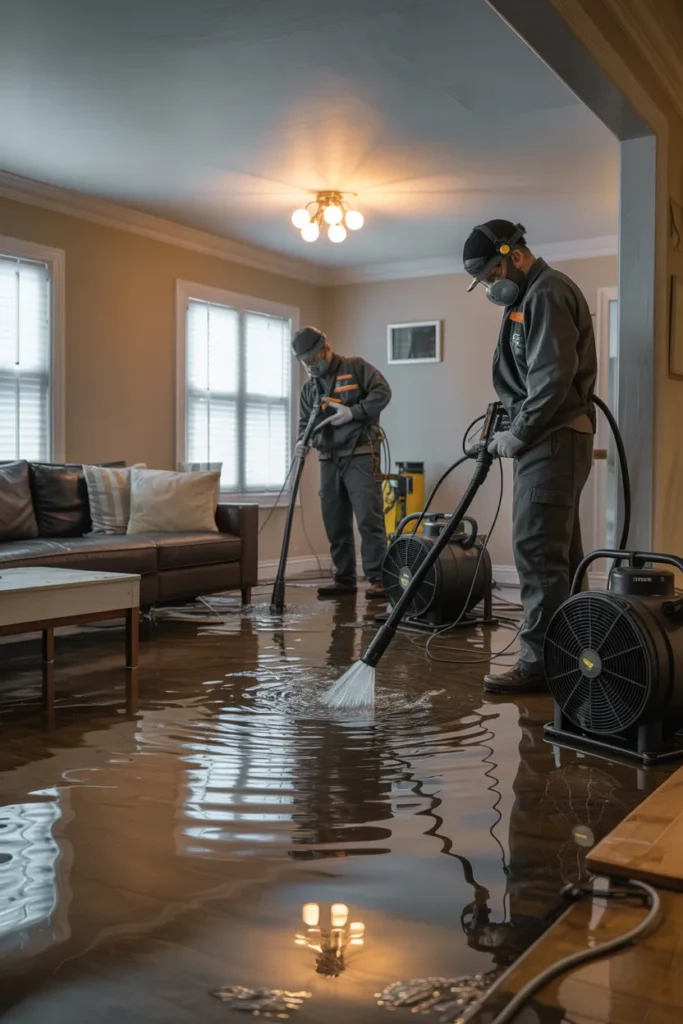
When should you call for emergency water removal?
When should you call for emergency water removal?
Call as soon as water reaches floors, walls, carpet, cabinets, or baseboards.
Water can move under flooring and behind trim. A room may look dry while the wall cavity stays wet.
Fast extraction helps limit damage. Drying equipment can then pull moisture from wet materials.
The EPA says wet areas should dry within 24 to 48 hours when possible. This helps reduce mold risk.
Why does fast drying matter?
Mold control starts with moisture control.
The EPA says mold will not grow in most cases if wet areas dry within 24 to 48 hours.
That window matters after a leak, spill, overflow, or flood.
Wet drywall can swell. Wood floors can cup. Baseboards can pull away. Cabinets can trap water near the toe kick.
The sooner drying starts, the better your chance of reducing damage.
How do we clean up water damage?
We start by checking the affected area.
Then we remove standing water. After that, we check flooring, walls, baseboards, cabinets, and nearby rooms.
Moisture readings help show what still needs drying.
Air movers and dehumidifiers can dry wet materials. We also monitor progress during the drying process.
We document photos, affected areas, moisture readings, and removed materials.
This helps homeowners, landlords, and insurance adjusters understand the loss.
How do we find hidden moisture?
We check the places water often hides.
Water can move behind walls, under floors, into closets, and below cabinets. It can also enter crawl spaces and ceiling cavities.
The EPA says hidden areas need close attention after moisture problems. It names walls, ceilings, crawl spaces, and attics.
This is why surface drying is not enough.
A floor can feel dry while the subfloor still holds moisture.
Can wet carpet be saved?
Wet carpet may be saved if the water is clean and drying starts quickly.
Carpet pad often holds water. It may need removal. The subfloor also needs checking.
The EPA’s water damage table says carpet and backing should dry within 24 to 48 hours. It also recommends water extraction for clean water damage.
Sewage water is different.
Carpet touched by sewage often needs removal. Safety comes first.
Is sewage backup cleanup dangerous?
Yes. Sewage water can carry waste, bacteria, and unsafe material.
Do not walk through sewage water without protection. Do not let children or pets enter the area.
Sewage backup cleanup may include water removal, material removal, cleaning, sanitizing, and drying.
This is not normal carpet cleaning.
It needs careful handling and proper protection.
What is the difference between water damage and flood damage?
Water damage often starts inside the property.
A burst pipe, toilet overflow, or appliance leak usually starts indoors.
Flood damage often starts outside the property. Heavy rain, rising water, or stormwater may fall under flood rules.
Fremont provides flood risk resources, FEMA flood zone information, and local flood map links.
FEMA also says flood maps help communities see areas with higher flood risk.
Insurance coverage depends on the water source and policy.
Does insurance cover water cleanup?
Insurance may cover sudden and accidental water damage.
A broken pipe may be handled differently than a slow leak. Outside flooding may need separate flood coverage.
Take photos before cleanup. Keep records of wet areas, damaged items, moisture readings, and drying steps.
Do not promise yourself coverage before reading the policy.
Call your insurance company early. Ask what they need for the claim.
We can help document visible damage and drying work.
Should you call insurance or cleanup first?
Call both early.
If water is spreading, cleanup should not wait. Emergency mitigation can help limit more damage.
Insurance companies often want photos, notes, invoices, and drying records.
Take photos before moving damaged items. Keep receipts. Write down when the leak started.
Good records can make the claim easier to review.
Common Causes of Water Damage in Fremont Homes
Water damage can occur from a variety of sources. Some of the most common causes include:
- Burst or leaking pipes
- Overflowing sinks or bathtubs
- Appliance leaks from dishwashers or washing machines
- Heavy rain or storm flooding
- Roof leaks
- Sewer backups
No matter the cause, our Water Damage Restoration Fremont specialists are trained to handle all types of water emergencies. We identify the source of the problem, stop the water intrusion, and begin the restoration process immediately.
| Water Source | Common Signs | Why It Needs Fast Action |
|---|---|---|
| Broken pipe | Wet walls, soaked flooring, low water pressure | Water can spread behind walls |
| Water heater leak | Puddles near the tank, warm water on the floor | Flooring and drywall can absorb moisture |
| Washing machine leak | Wet laundry room, damp baseboards | Water may reach nearby rooms |
| Roof leak | Ceiling stains, dripping water, attic moisture | Hidden mold risk can increase |
| Toilet overflow | Dirty water, odor, wet flooring | Sanitation may be needed |
| Storm flooding | Standing water, mud, soaked carpet | Contaminants may be present |
Our Water Damage Restoration Process
A professional restoration process ensures that all moisture is properly removed and hidden damage is addressed. Our proven restoration approach includes several important steps.
Inspection and Damage Assessment
Our technicians perform a detailed inspection using moisture meters and thermal imaging to identify affected areas. This helps determine the extent of the damage and the best restoration strategy.
Water Extraction
We use powerful pumps and vacuums to remove standing water quickly. This step is critical to prevent water from spreading further into floors and walls.
Structural Drying
Industrial air movers and dehumidifiers are placed strategically throughout the property to dry materials like drywall, wood, and flooring.
Cleaning and Sanitizing
Once the structure is dry, we clean and sanitize affected areas to remove bacteria, odors, and contaminants.
Restoration and Repairs
The final stage involves repairing damaged materials such as drywall, flooring, or carpets to restore your property completely.
Why do Fremont homes need careful water cleanup?
Fremont homes are valuable.
The Census Bureau lists Fremont’s median owner occupied home value at more than $1.4 million for 2020 to 2024. It also lists median gross rent at $2,933.
That means water damage can affect costly floors, cabinets, walls, and rental income.
Fast cleanup protects more than a room.
It helps protect a high value property.
Do we help landlords and property managers?
Yes. We help with rentals, condos, apartments, and townhomes.
Tenant water damage needs quick coordination. A leak can affect flooring, walls, lower units, and shared spaces.
We can document the damage for owners and managers.
We can also help with access notes, affected area photos, and drying records.
This helps when the owner, tenant, and insurance company all need updates.
| Water Type | Common Source | Risk Level | What It May Need |
|---|---|---|---|
| Clean water | Supply line, sink leak, rainwater | Lower risk at first | Extraction and drying |
| Gray water | Washing machine, dishwasher, shower drain | Medium risk | Cleaning and drying |
| Black water | Sewage, toilet backup, floodwater | Higher risk | Removal, cleanup, sanitation |
Do we handle commercial water cleanup?
Yes. We help offices, shops, clinics, warehouses, and small facilities.
Water inside a business can stop work fast. Wet floors can create safety risks. Moisture can also damage stock, supplies, walls, and equipment.
The EPA has water damage guidance for schools and commercial buildings. It notes that quick action can reduce the need for mold cleanup.
Commercial cleanup should stay organized.
You need water removal, drying, safety checks, and clear records.
Where do we serve in Fremont?
We serve the main Fremont districts and nearby areas.
Fremont formed from five townships in 1956. The city names them as Centerville, Niles, Irvington, Warm Springs, and Mission San Jose.
We help near those areas and nearby neighborhoods.
This includes Ardenwood, Brookvale, Sundale, Northgate, Weibel, Cabrillo, and South Fremont.
We also serve 94536, 94538, 94539, and 94555.
What local roads do we cover?
We serve homes and businesses near major Fremont roads.
This includes Fremont Boulevard, Mowry Avenue, Mission Boulevard, Paseo Padre Parkway, Stevenson Boulevard, Grimmer Boulevard, Walnut Avenue, and Auto Mall Parkway.
We also help properties near Interstate 880 and Interstate 680.
Water emergencies do not follow business hours.
Call when you find wet floors, spreading water, or damp walls.
Do we serve near Central Park and Lake Elizabeth?
Yes. We serve properties near Central Park and Lake Elizabeth.
The City of Fremont lists Central Park and Lake Elizabeth at 40000 Paseo Padre Parkway.
Water calls near this area often involve condos, apartments, homes, offices, and rental units.
We can help with burst pipes, appliance leaks, wet flooring, and ceiling leaks.
Do we serve near Mission Peak and Ohlone College?
Yes. We serve the Mission San Jose and Ohlone College area.
Ohlone College lists its Fremont campus at 43600 Mission Boulevard.
We also serve homes near Mission Peak, Mission Boulevard, and Stanford Avenue.
These calls may include hillside homes, garages, crawl spaces, and rental properties.
Water can travel downhill through floors and walls.
Moisture checks matter in these homes.
Do we serve near Fremont schools?
Yes. We help homes and buildings near Fremont schools.
Fremont Unified serves more than 32,000 TK through grade 12 students.
We serve areas near Washington High School on Fremont Boulevard. The school lists its address as 38442 Fremont Boulevard.
We also help near Irvington, American, Kennedy, and Mission San Jose High School areas.
School area homes often include rentals, family homes, condos, and townhomes.
Fast cleanup helps reduce damage and disruption.
What causes water damage in Fremont homes?
Most calls start from normal household systems.
A washer hose can break. A toilet can overflow. A water heater can leak. A dishwasher line can fail.
Roof leaks can also affect ceilings and walls after rain.
Crawl spaces may collect water from plumbing leaks or drainage problems.
Older parts, pressure changes, and hidden leaks can make small problems worse.
How do we handle a burst pipe?
Shut off the water if you can do it safely.
Move dry items away from the wet area. Take photos of the leak and damage.
Call for extraction if water reached flooring, walls, or cabinets.
A burst pipe can soak more than one room. It can also affect rooms below the leak.
We check nearby spaces before drying begins.
How do we handle a water heater leak?
Turn off the water supply if safe.
A leaking water heater can soak garages, closets, hallways, and nearby rooms.
Water may run under baseboards before you see it.
Do not only mop the visible water.
The wall, floor, and nearby trim may still hold moisture.
How do we handle an appliance leak?
Stop the appliance and shut off the water if safe.
Washing machines, dishwashers, refrigerators, and ice makers can leak quietly.
A slow leak can damage cabinets and flooring. A hose break can flood a room fast.
We check the appliance area, nearby cabinets, walls, and flooring.
How do we handle a toilet overflow?
Treat the water as unsafe until checked.
A clean tank overflow is different from a sewage backup. Dirty water needs careful cleanup.
Do not use towels you want to keep.
Do not let children or pets enter the wet area.
Call for water removal, cleaning, and drying.
How do we handle crawl space water?
We remove water and check moisture under the home.
Crawl spaces can stay damp after the living area looks dry.
Damp wood, insulation, and soil can create odor and moisture problems.
The EPA says crawl spaces need attention after water problems.
Crawl space drying should not be skipped.
| Area | What Can Happen | What We Check |
|---|---|---|
| Carpet | Water can reach the pad below | Moisture level and odor |
| Drywall | Water can wick upward | Wet spots and soft areas |
| Baseboards | Moisture can hide behind trim | Swelling and trapped water |
| Wood flooring | Boards can cup or buckle | Moisture under the surface |
| Cabinets | Water can sit under boxes | Toe kicks and lower panels |
| Ceiling | Leaks can spread across panels | Stains, sagging, and damp spots |
How long does drying take?
Small jobs may dry in a few days.
Larger jobs can take longer. Drying time depends on materials, water amount, airflow, and humidity.
Hardwood, cabinets, insulation, and wall cavities may need more time.
Moisture readings help decide when drying is complete.
Guessing is not enough.
Can you dry water damage yourself?
Small spills may dry with towels and airflow.
Larger leaks need more care. Water can hide under floors, behind trim, and inside walls.
Do not use electrical tools in standing water.
Do not assume a room is dry because the surface looks dry.
Call for help when water reached flooring, walls, cabinets, carpet, or crawl spaces.
Why choose a water cleanup specialist over a carpet cleaner?
Water cleanup is more than carpet cleaning.
A carpet cleaner may clean the surface. A water cleanup team checks where moisture traveled.
That can include drywall, baseboards, subfloors, cabinets, ceilings, and crawl spaces.
The job is not only to make carpet look clean.
The job is to remove water, dry materials, and reduce further damage.
What should you expect when you call?
You should get clear next steps.
We ask what happened, where the water is, and if the source stopped. We also ask about electricity, sewage, and affected rooms.
Then we explain what should happen first.
That may include water extraction, moisture checks, drying equipment, and photos for records.
No pressure. No scare tactics. Just clear help.
What areas near Fremont do we serve?
We serve Fremont and nearby cities.
This includes Newark, Union City, Hayward, Milpitas, and parts of San Jose.
We also help near Warm Springs BART, Fremont BART, Central Park, Mission Boulevard, and Auto Mall Parkway.
Call [phone number] if you are near Fremont and need fast water cleanup.
More questions Fremont property owners ask
Can water damage cause mold?
Yes. Mold can grow when moisture stays too long.
Fast drying lowers the risk. The EPA says moisture control is the key to mold control.
Can wet drywall dry in place?
Sometimes. It depends on water type and damage level.
Swollen drywall, sewage contact, or trapped moisture may require removal.
Should I remove wet baseboards?
Do not start tearing materials out without photos.
Baseboards may need removal if moisture sits behind them.
Is floodwater safe to clean myself?
Floodwater may not be safe.
It can contain dirt, chemicals, sewage, or sharp debris. Use caution and avoid electrical hazards.
Can I wait until tomorrow?
Do not wait if water reached floors, walls, or cabinets.
Moisture can spread and become harder to dry.
Do you help with insurance records?
Yes. We can document photos, moisture readings, affected rooms, and drying steps.
Your policy decides coverage.
Do you help property managers?
Yes. We help with tenant leaks, apartment water damage, rental homes, and condos.
We can provide clear records for owners.
Do you handle after hours calls?
Yes. Water problems can happen at night, on weekends, or during holidays.
Call when you find standing water or wet materials.
Call now for water cleanup in Fremont
Call [phone number] now.
We help remove water, check moisture, dry wet areas, and document the damage.
Get help for burst pipes, leaks, toilet overflows, appliance leaks, sewage backups, crawl space water, and flood cleanup.
Fast action can reduce damage.et cleaning
| Problem | Call Right Away? | Reason |
|---|---|---|
| Standing water | Yes | Water can spread fast |
| Wet drywall | Yes | Moisture can hide inside walls |
| Sewage backup | Yes | Health risks may be present |
| Ceiling leak | Yes | The ceiling may weaken |
| Small sink spill | Maybe | It depends how far water spread |
| Musty smell | Yes | Hidden moisture may remain |
.